
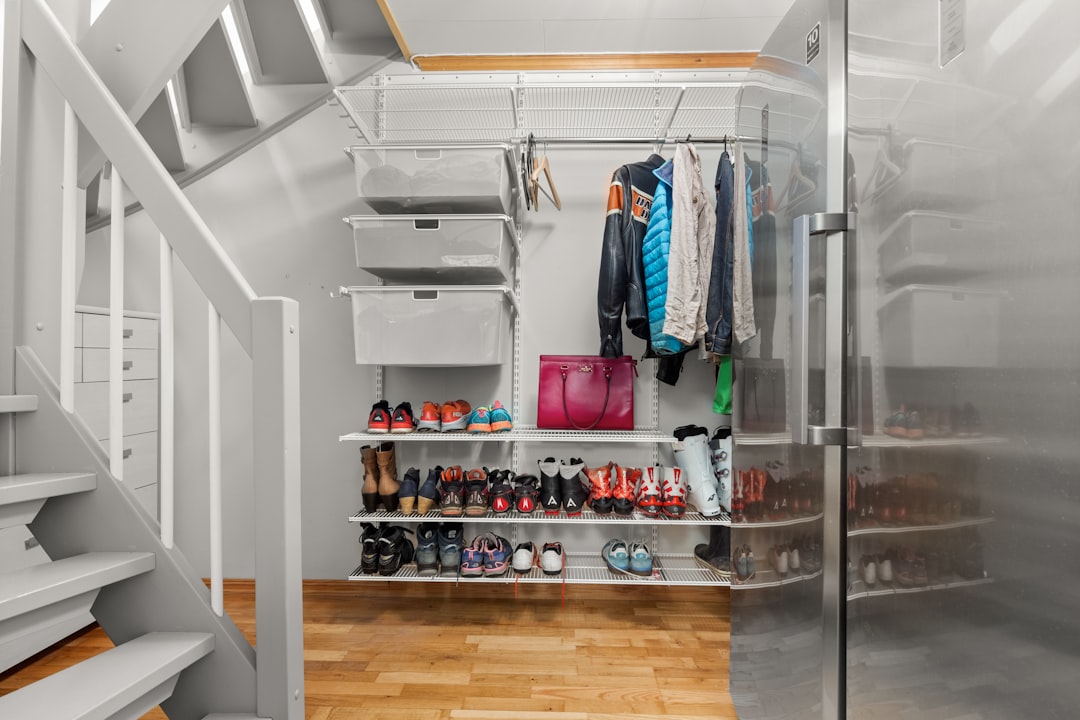
Struggling to squeeze style and function into a tiny closet? These nine practical, tested tactics will help you reclaim space, speed up mornings, and keep every hanger earning its place.
Maximize Vertical Space with Tiered Shelving
Think upward: most small closets waste the volume above hanging clothes. Install tiered shelves to stack sweaters, bags, and boxes while leaving room for a second hanging rod below for shorter items like shirts and skirts.
Use adjustable brackets so you can change shelf height as your wardrobe shifts. Open shelves keep items visible, which cuts decision time and prevents clothes from becoming forgotten at the back.
Pro Tip: Add thin non-slip liners to each shelf to prevent stacks from sliding when you pull something out.
Use Uniform Hangers for 30 Percent More Space
Mismatched hangers create gaps and visual clutter that eat up space. Swap bulky wooden or thick plastic hangers for slim, velvet or slim metal hangers to create a cleaner, tighter row of clothing.
Uniform hangers also keep garments at the same height, allowing you to spot empty space at a glance and fit more pieces without cramming. Replace hangers in small batches so the closet stays usable during the switch.
Quick Tip: Use matching hangers just for tops and a different matching color for pants to speed outfit selection.
Zone Your Closet for Faster Outfit Decisions
Divide the closet into clear zones: workwear, casual, active, and accessories. Assign a specific rod or shelf to each zone so you always know where to look when you need a particular type of outfit.
Labeling zones either with small tags or colored hangers helps guests or partners put things back correctly, and it reduces the “dump everything” problem that causes clutter. Keep the most used zone at eye level for quick access.
Expert Insight: Put seasonal items in the least accessible zone to prioritize daily wear without extra digging.
Add Pull-Out Storage for Small Items
Shelves are great, but small items like belts, scarves, and jewelry need contained storage to avoid tangles and mess. Install pull-out trays or shallow drawers to keep accessories visible and organized without taking extra depth.
Pull-out options make it simple to reach items stored near the back without displacing other things. Clear front drawers or fabric dividers inside these drawers make maintenance painless and encourage you to return items to their proper place.
Insider Tip: Keep a small tray near the door for last-minute items you carry daily, such as sunglasses or a transit card.
Use Clear Containers and Labels for Quick Visibility
Opaque boxes hide contents and invite rediscovery piles. Choose clear plastic bins or shallow acrylic drawers so you can see what’s inside at a glance, saving time and preventing duplicate purchases.
Label each container with what it holds, not just the category. For example, label “Lightweight Beanies” instead of “Hats” to reduce the time spent rummaging and to train yourself to return items correctly.
Heads Up: Reserve labeled bins for items you reach for at least once a month to avoid storing rarely used pieces in prime space.
Rotate Clothes Seasonally to Keep the Closet Lean
Store out-of-season clothing in vacuum bags or under-bed boxes, and move your current season front and center. Rotating garments reduces crowding and highlights the pieces you will actually wear.
If you have limited storage elsewhere, rotate more frequently, for example mid-season, to remove items you wore less than expected. A lighter closet looks larger and makes outfit choices quicker.
Worth Knowing: When rotating, audition items for wearability; if you haven’t missed it, consider donating it to free up space.
Install Over-the-Door Solutions for Extra Pockets
Door real estate is often wasted in small closets. Over-the-door organizers add pockets for shoes, accessories, and small laundry items without reducing internal space. They are easy to install and remove, which is ideal for renters.
Choose thin, sturdy organizers to avoid bulking the door and ensure it still closes properly. Use the pockets for lightweight items to avoid stressing the door hinges or organizer fabric.
Pro Tip: Use a few pockets for “outfit prep” items each night to streamline morning routines.
Create a Capsule Wardrobe to Reduce Decision Fatigue
A capsule wardrobe is a curated set of versatile pieces that mix and match well, which reduces the number of garments you need to store. Aim for quality basics that cover most of your lifestyle to shrink the closet without feeling deprived.
Start with a seasonal capsule and expand only when a new piece complements at least three existing items. This approach keeps the closet manageable and makes getting dressed faster and less stressful.
Quick Tip: Keep a small capsule for travel so you can pack quickly and return items to the same place when you come home.
Light It Up to See and Save Space
Poor lighting makes a small closet feel smaller and encourages overbuying because you cannot clearly view what you own. Install bright, motion-activated LED lights to illuminate shelves and rods instantly when the door opens.
Battery-powered strip lights are simple to add and do not require wiring, which is great for renters. Good lighting also helps you spot underused items that you can donate or relocate.
Expert Insight: Place a small daylight bulb near shoes and accessories for true color matching and easier coordination.
Your Small Closet, Big Impact
Apply one or two of these tactics and you will notice immediate gains; combine three or more to transform how your closet functions. Which tip will you try first, and what would you like help implementing in your space?